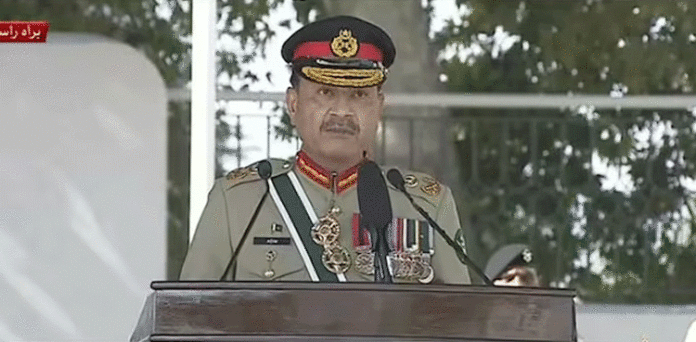
Pakistan Army Chief Munir Warns India: “No Space for War in Nuclear Environment” at PMA Kakul Parade

Field Marshal Asim Munir Sends a Strong Message to India: “No Space for War in a Nuclear Environment”

Pakistan Army Chief Munir Warns India: “No Space for War in Nuclear Environment” at PMA Kakul Parade Abbottabad, October 18 2025 — During the passing-out parade of the 152nd Long Course at the Pakistan Military Academy (PMA) Kakul, Chief of Army Staff Field Marshal Syed Asim Munir delivered a hard-hitting address in which he stressed Pakistan’s commitment to national defence and warned that “in a nuclearised environment, there is no space for war between the two countries.” The Army Chief said it was a great honor to review the parade of newly commissioned officers, congratulating cadets from Bangladesh, Iraq, Mali, Maldives, Nigeria, Nepal, Palestine, Qatar, Sri Lanka, and Yemen on successfully completing their training. He paid rich tribute to the sacrifices of Pakistan’s martyrs and veterans, stating, “It is because of their sacrifices that we breathe in freedom today. You should be proud to join one of the most disciplined and dignified armies in the world.” Field Marshal Munir reiterated that Pakistan’s defense doctrine is based on credible deterrence and constant preparedness. Pakistan Strongly Condemns Israeli Action Against Global Samoud Flotilla “If aggression is ever attempted again, the response will be far harsher than expected. Our weapons can reach far and neutralize the enemy’s geographic assumptions.” He made it clear that no external power would be allowed to challenge Pakistan’s sovereignty, adding that the armed forces and the people of Pakistan form an unbreakable bond that cannot be divided by propaganda or psychological warfare. Highlighting the success of recent military operations under Operation Ma’rakah-e-Haq / Banyan-e-Marsous, Asim Munir stated that Pakistan’s forces had “defeated a numerically larger enemy intoxicated by the illusion of superiority.” He revealed that during recent engagements, enemy Rafale jets were shot down, several S-400 systems and bases were destroyed, and Pakistan displayed exceptional multi-domain warfare capabilities. Addressing India directly, Field Marshal Munir warned: “In a nuclear environment, there is no scope for war between the two nations. India must resolve all issues in accordance with international principles, equality, and mutual respect. Pakistan will never be intimidated by rhetoric and will respond decisively to any provocation.” He further cautioned that any future escalation in the region would be India’s responsibility, which could have “catastrophic consequences for the entire region and beyond.” Field Marshal Munir observed that the global dynamics of conflict are shifting, with violence being increasingly used as a tool for political ends.He said, “Pakistan has emerged as a ‘Net Regional Stabilizer’ in South Asia, contributing significantly to peace and stability both regionally and globally.” The Army Chief added that Pakistan’s relations with global powers and Muslim countries are growing stronger and that the nation continues to play a key role in UN peacekeeping missions worldwide. Concluding his speech, Field Marshal Asim Munir declared: “We are united, we are strong, and with the blessings of Almighty Allah, we are capable of facing any challenge that comes our way.” Protests Continue in Israel Against Netanyahu Government

Continue Reading
North Waziristan: Security Forces Foil Suicide Attack, Four Militants Killed

North Waziristan: Security Forces Foil Suicide Attack, Four Militants Killed

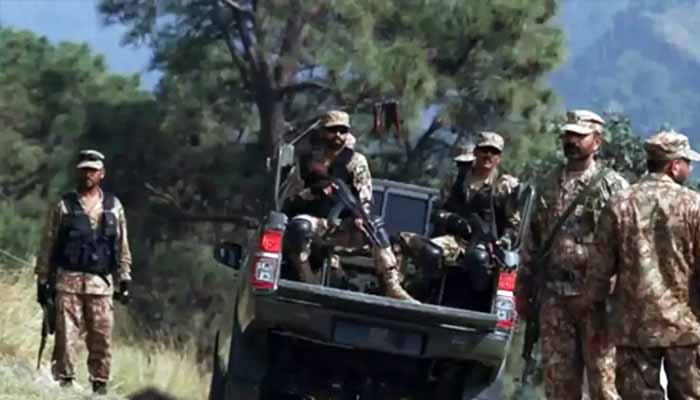
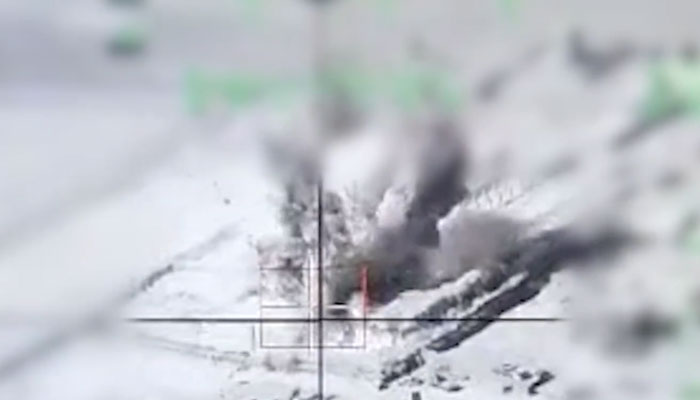
North Waziristan: Pakistan Security Forces Foil Suicide Attack, Four Militants Killed in Mir Ali Operation North Waziristan, Pakistan – October 17, 2025:Pakistani security forces successfully foiled a suicide attack in North Waziristan’s Mir Ali area, killing four militants affiliated with extremist networks. According to security sources, a group of militants attempted to carry out a coordinated suicide attack targeting a military camp. One attacker rammed an explosive-laden vehicle into the perimeter wall of the camp, causing a powerful explosion. However, as three additional attackers tried to storm the compound, security forces responded swiftly, killing all of them before they could breach the facility. Pakistan Army Says It Repelled Attacks by Afghan Taliban and Militant Factions in Spin Boldak; 20 Insurgents Killed, ISPR Reports “The timely and courageous response of the troops prevented significant damage and casualties,” said an intelligence official. “No losses were reported among the security personnel.” “The timely and courageous response of the troops prevented significant damage and casualties,” said an intelligence official. “No losses were reported among the security personnel.” Officials reiterated that Pakistan’s armed forces and law enforcement agencies remain fully committed to eliminating the remaining threats and ensuring lasting peace in the border areas. Source: GeoNews FAQ’S 1. What happened in North Waziristan’s Mir Ali area today?Security forces in North Waziristan’s Mir Ali region successfully foiled a suicide attack by militants. The operation resulted in the killing of four attackers, preventing significant damage. 2. Who were the militants involved in the North Waziristan suicide attack?According to reports, the attackers were extremists linked to Afghan Taliban-backed factions, operating along the Pakistan-Afghanistan border. 3. Were there any casualties among Pakistan’s security forces?No, the security sources confirmed that the Pakistani troops suffered no casualties during the operation in Mir Ali, North Waziristan. 4. How many militants have been killed in recent counter-terrorism operations?Over the past 48 hours, security forces have eliminated at least 88 militants in North Waziristan and surrounding areas as part of ongoing anti-terror operations. 5. What is the Pakistan Army’s response to recent militant activities?The Pakistan Army has vowed to continue counter-terror operations until all militant hideouts are destroyed and lasting peace is restored in the border regions.  

Continue Reading

Pakistan Says It Killed 200+ Taliban Fighters in Cross-Border Response; 23 Soldiers Killed, Tensions Escalate

Pakistan’s military says it killed more than 200 Taliban and affiliated fighters after overnight cross-border clashes; 23 Pakistani soldiers were martyred. Islamabad vows decisive action while regional diplomatic pressure grows. Pakistan’s military announced that, in response to an “unprovoked” incursion and sustained firing from Afghan territory, it carried out precision strikes and operations that killed more than 200 Afghan Taliban and affiliated militants and temporarily seized several border positions. The Inter-Services Public Relations (ISPR) statement also confirmed that 23 Pakistani soldiers were killed and dozens wounded during the exchange. Islamabad said strikes targeted Taliban camps, training facilities and supportive networks in Afghan border areas. According to the ISPR, Afghan Taliban forces and allied militant groups launched coordinated attacks on Pakistani border posts late on the night of October 11–12. Pakistan says it responded with “effective and decisive” defensive measures that included artillery fire, ground raids and air strikes on identified Taliban camps and posts inside Afghanistan. The military said operations were intended to destroy terrorist training sites and support networks — groups it named include local Taliban factions as well as elements linked to ISIS and other extremist cells. The ISPR further stated that precautionary measures were taken to protect civilians and minimize unnecessary loss of life. Pakistan’s official estimate places militant fatalities at over 200, and reports say many more were wounded in the strikes. The ISPR also claims that 21 Taliban positions were temporarily occupied and multiple training camps and logistics hubs on the Afghan side were rendered inoperative. At the same time, Afghan officials disputed parts of Pakistan’s account: Kabul-aligned spokespeople reported higher Pakistani casualties and different battlefield outcomes, producing sharply contrasting tallies that reflect the fog of war and the intense propaganda battle accompanying the clashes. International news agencies have noted the conflicting claims from both sides. Pakistan said 23 soldiers lost their lives in the exchange and dozens were injured. The military described those fatalities as martyrdoms sustained while repelling cross-border aggression and reiterated that the armed forces remain prepared to defend citizens and territorial integrity. Pakistani statements emphasize that strikes focused on military and militant infrastructure — camps, firing points and command posts — and that steps were taken to avoid civilian casualties where possible. Local and international journalists, however, have reported signs of cross-border displacement and temporary closure of key border crossings as authorities restricted movement amid the fighting. The ISPR framed the strikes as a defensive response to “escalatory” incidents and accused external actors of supporting militant groups that target Pakistan. Islamabad also linked the timing of the provocation to a recent high-level visit by Afghanistan’s foreign minister to India, repeating long-standing Pakistani allegations that some states provide material or diplomatic support to anti-Pakistan militant networks. Pakistan says weapons left behind after international forces withdrew from Afghanistan have exacerbated the security threat. Kabul has denied complicity in cross-border militant activity and described Pakistani strikes as violations of its sovereignty. The clashes prompted immediate diplomatic concern and the temporary closure of major border crossings, disrupting trade and civilian movement across the Durand Line. Regional mediators and Gulf states have reportedly urged restraint and dialogue to prevent further escalation. International outlets report both Pakistan and Afghanistan appealed to friendly states to help de-escalate; Qatar and Saudi Arabia, in particular, have historically played mediation roles in Pakistan-Afghan tensions. Observers warn that if reciprocal strikes and retaliatory rhetoric continue, the incident could widen into a more prolonged exchange with humanitarian and economic consequences for border communities. In Pakistan, the military’s statement has been framed as a necessary defensive action to protect civilians and sovereignty. Government officials have expressed solidarity with the armed forces and called for national unity. Opposition and civil-society voices — while condemning the loss of soldiers’ lives — are also urging clarity on the operational timeline, rules of engagement, and steps to prevent civilian harm. Analysts note the incident reinforces the military’s long-standing narrative about cross-border sanctuaries and external support for anti-state militants, which may intensify calls for a firmer security posture and a diplomatic push to isolate militant safe havens. What to watch next — possible scenarios Diplomatic de-escalation: Mediation by regional actors could lead to a cessation of active exchanges and reopening of border crossings. Tit-for-tat reprisals: Continued accusations and limited strikes might spiral into repeated clashes along the porous frontier. International involvement: Pressure from major powers could increase, with calls for restraint and renewed emphasis on counter-terrorism cooperation. Humanitarian consequences: Prolonged instability could displace civilians and hinder aid and trade flows in the border belt. The Pakistani military’s assertion of decisive action underscores a policy of active defense and punitive response to threats emanating from across the border. If Islamabad’s casualty and damage estimates are accurate, the strikes dealt a significant blow to militant infrastructure — at least in the short term. However, asymmetric conflicts driven by transnational militant networks rarely end with a single engagement: sustainable security gains will depend on improved border management, intelligence cooperation, diplomatic engagement with Kabul, and political measures to reduce the vulnerabilities militants exploit. For the local population, restoring normalcy and reopening trade links will be an urgent priority. The overnight exchange between Pakistani forces and Afghan-based militants marks a serious escalation on the Afghanistan–Pakistan frontier. Islamabad’s claim of neutralizing over 200 militants while suffering 23 soldiers killed will likely harden positions and intensify diplomatic activity. The coming days will be critical: regional mediation could avert further escalation, but the incident also highlights continuing challenges in addressing cross-border militancy and the fragile security dynamics of the region. Thunderstorm Alert in Islamabad: Dozens of Flights Cancelled and Delayed Across Pakistan    

Continue Reading